1. What is a bioseptic tank?
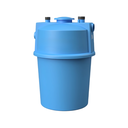
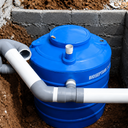
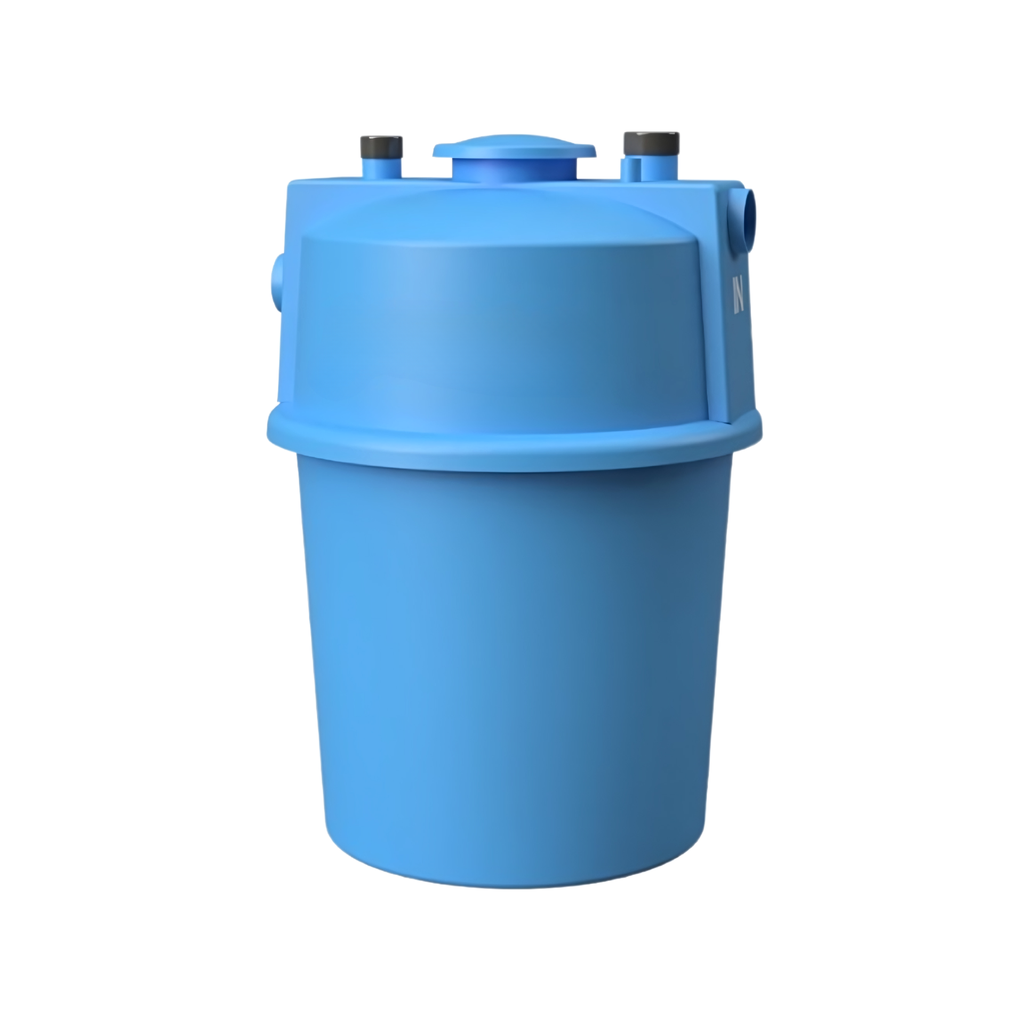
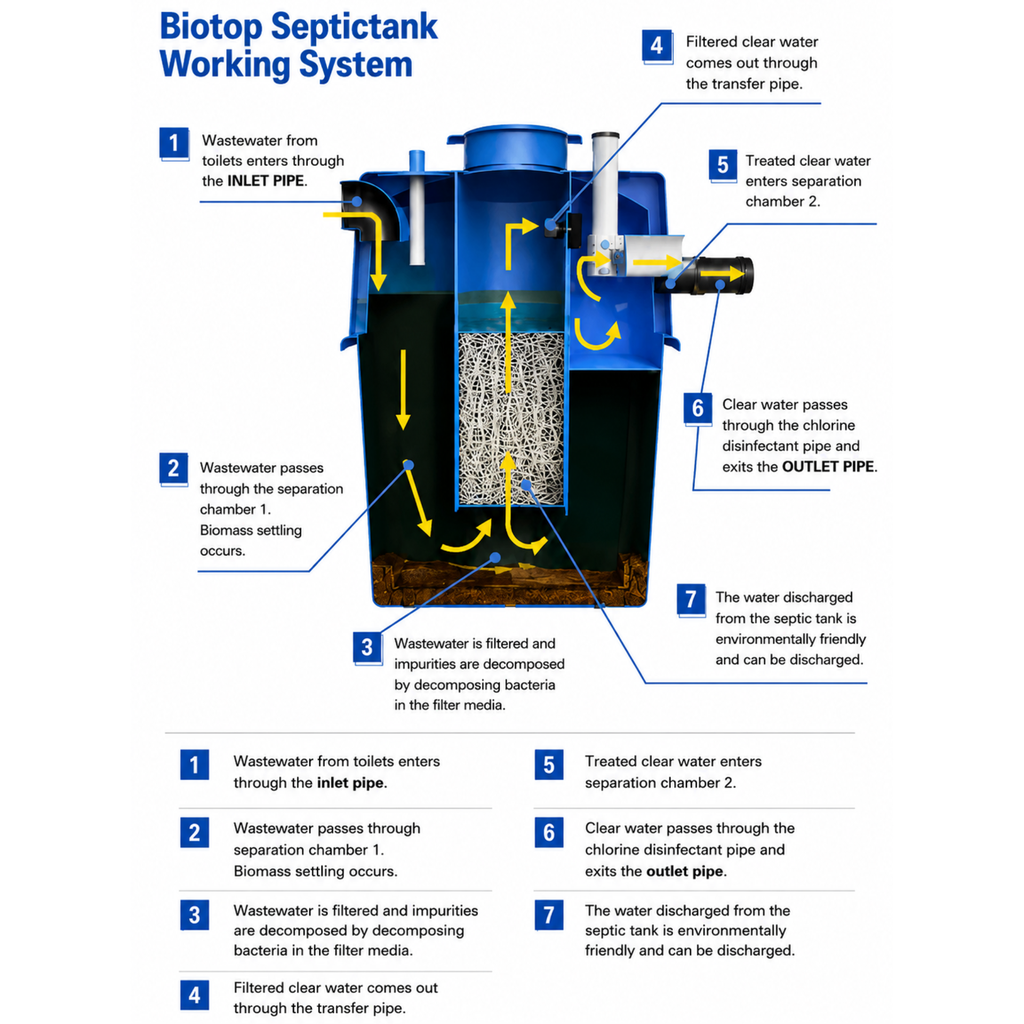
A bioseptic tank is a wastewater treatment system that uses separation, filtration and beneficial bacteria to break down organic waste before the treated water leaves the tank.
2. How does a bioseptic tank work?
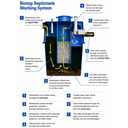
Wastewater enters the tank and passes through treatment stages. Solid waste settles, wastewater passes through biological filter media, bacteria break down organic matter, and the treated water passes through the final treatment chamber before leaving through the outlet.
3. What is the difference between the vertical and horizontal bioseptic tanks?
Both tanks use a similar biological treatment process. The main difference is their shape, internal chamber arrangement and installation footprint.
- Vertical tank: Requires less ground area but greater installation depth.
- Horizontal tank: Requires more ground area but generally has a shallower installation profile.
The appropriate model depends on the available space, required capacity and site conditions.
4. What is the filter media used for?
The filter media provides a large surface area for beneficial bacteria to grow. These bacteria help break down organic waste and reduce impurities in the wastewater.
5. What are BioBalls?
BioBalls are biological filter media designed to provide a large surface area for beneficial bacteria. The bacteria help naturally break down organic matter as wastewater passes through the treatment chamber.
6. Does the system separate solid waste?
Yes. Heavier solid waste settles at the bottom of the first chamber as sludge, while the wastewater continues through the treatment process.
7. What happens to non-biodegradable waste?
Depending on the tank model, a screen or filter helps prevent larger non-biodegradable material from entering the biological treatment section. Items such as plastic, sanitary products, wipes and other solid waste should not be flushed into the system.
8. What is the disinfectant pipe used for?
The disinfectant pipe provides a final treatment stage before the water leaves the tank, helping improve the quality of the discharged water.
9. Can the outlet water be used as drinking water?
No. The outlet water should not be considered drinking water. The bioseptic tank is designed for wastewater treatment and discharge, not for producing potable water.
10. Where can the treated water be discharged?
The appropriate discharge method depends on the installation design and local regulations. The outlet may be connected to an approved drainage, infiltration or further wastewater treatment system.
11. Does a bioseptic tank still need to be emptied?
Yes. Although biological treatment reduces organic waste, some sludge will gradually accumulate at the bottom of the tank and will need to be removed periodically.
12. How often does the tank need to be cleaned?
The cleaning frequency depends on the tank capacity, number of users and amount of wastewater entering the system. The tank should be inspected periodically and desludged when required. Common signs that the tank may be full include a persistent unpleasant smell around the septic tank or wastewater backing up into the toilet.
13. What is the cleaning tube for?
The cleaning tube provides access for inspection, maintenance and removal of accumulated sludge without unnecessarily disturbing the complete system.
14. Do I need to add bacteria to the tank?
The system relies on beneficial bacteria for biological treatment. Whether additional bacterial treatment is required depends on the manufacturer's operating and maintenance recommendations.
15. Can normal toilet cleaning chemicals be used?
Normal household cleaning products should be used carefully. Excessive amounts of strong disinfectants, bleach or harsh chemicals can reduce the beneficial bacteria responsible for treating the wastewater.
16. Can toilet paper be flushed into the system?
Normal biodegradable toilet paper can generally enter a bioseptic system. Wet wipes, sanitary products, nappies, plastics and other non-biodegradable materials should not be flushed into the tank.
17. Does the bioseptic tank require electricity?
The tanks shown operate mainly through gravity, separation and biological filtration. Any requirement for pumps, aeration or other electrical equipment will depend on the specific installation and system configuration.
18. Will a bioseptic tank smell?
A correctly sized, installed, ventilated and maintained system should significantly control normal septic odours. Persistent strong odours can indicate a ventilation, maintenance, overloading or treatment problem.
19. How do I choose between a vertical and horizontal tank?
The selection should consider:
- Number of users
- Required tank capacity
- Available installation area
- Available excavation depth
- Ground and groundwater conditions
- Inlet and outlet pipe levels
- Required discharge system
20. Is the bioseptic tank suitable for houses and villas?
Yes. Bioseptic tanks can be suitable for houses, villas, accommodation properties and other buildings when the tank capacity and treatment system are correctly selected for the expected wastewater load.
21. Can rainwater be connected to the bioseptic tank?
Generally, no. Roof and surface rainwater should normally have a separate drainage system. Connecting large amounts of rainwater can overload the septic tank and reduce its treatment performance.
23. What is the bioseptic tank manufactured from?
The bioseptic tank is manufactured from fiberglass providing a strong, lightweight and leak resistant tank opposed to the traditional batako (concrete block) septic tanks.
24. What is the warranty period?
The bioseptic tank is supplied with a manufacturer's 5 year warranty subject to the correct installation and use.