System Overview
What is an FRP filtration system?
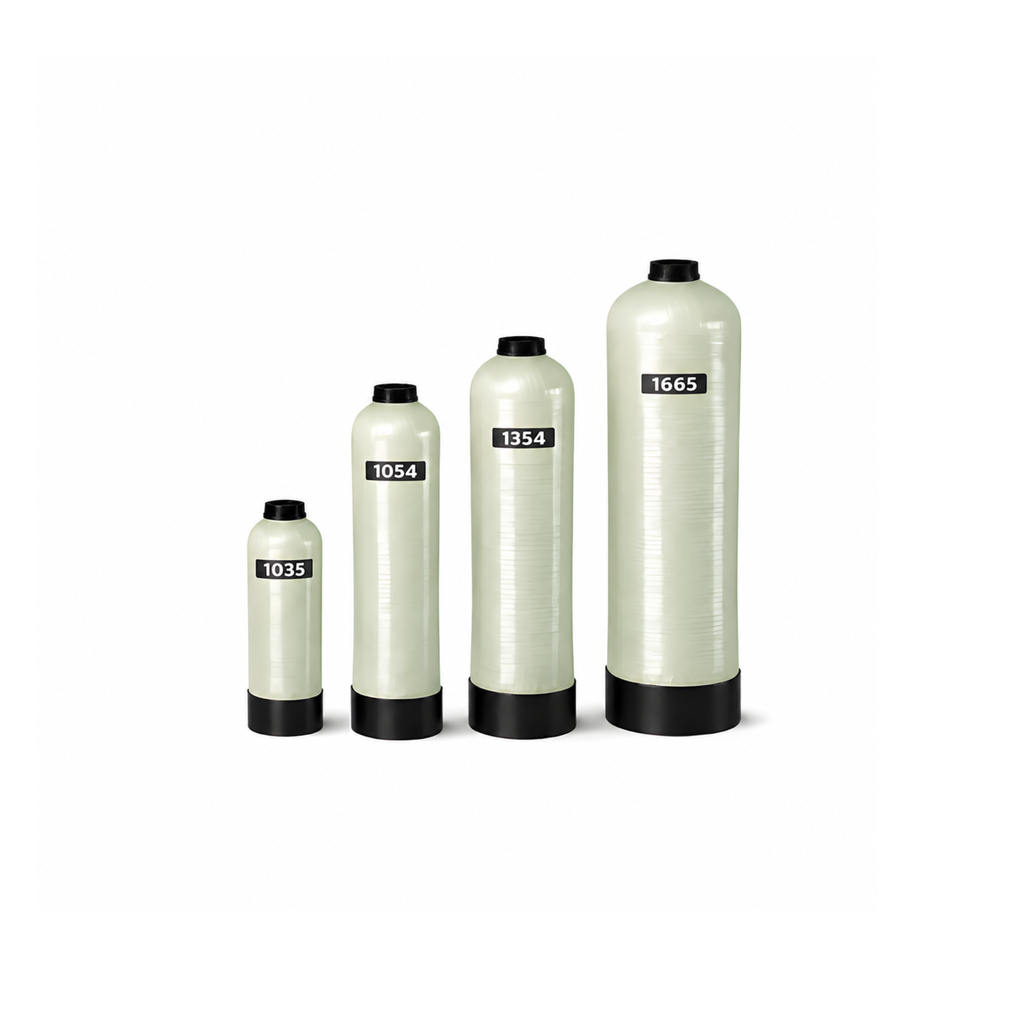
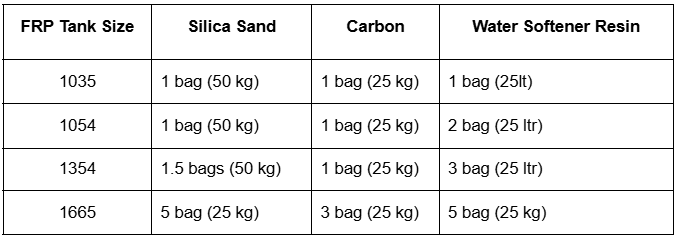
An FRP (Fiberglass Reinforced Plastic) filtration system is a pre-treatment system used to improve raw water quality before it reaches taps or an RO system. It uses filter media such as silica sand, activated carbon, or softener resin to remove sediment, iron, chlorine, odour, and colour—helping protect downstream equipment and improve overall water quality.
What is an RO system?
An RO (Reverse Osmosis) system produces clean drinking water by removing dissolved solids, contaminants, and impurities. It works by pushing water through a membrane that filters out fine particles such as bacteria, chemicals, and excess minerals. A typical system includes sediment and carbon filters, an RO membrane, UV sterilisation, and a storage tank.
Is a 6-stage RO system enough?
Yes. For most homes, villas, cafés, and small commercial setups, a properly selected 6-stage RO system is sufficient. Additional stages are only required if water testing identifies
a specific issue.
Choosing the Right System
Do I need an FRP system as well as RO?
Not always. If the incoming water is already reasonably clean, an RO system alone is usually sufficient for drinking water. An FRP system is recommended when water quality is poor, as it protects the RO system and reduces maintenance.
Do I need both systems together?
Only if water testing confirms it. Installing unnecessary filtration increases cost, space, and maintenance without improving results. BBS approach: test the water first, then recommend only what’s required.
What size system do I need?
System sizing depends on water usage, number of occupants, and application (drinking vs full house). BBS will recommend the correct size to ensure performance without overspending.
What is the difference between PDAM and well water setups?
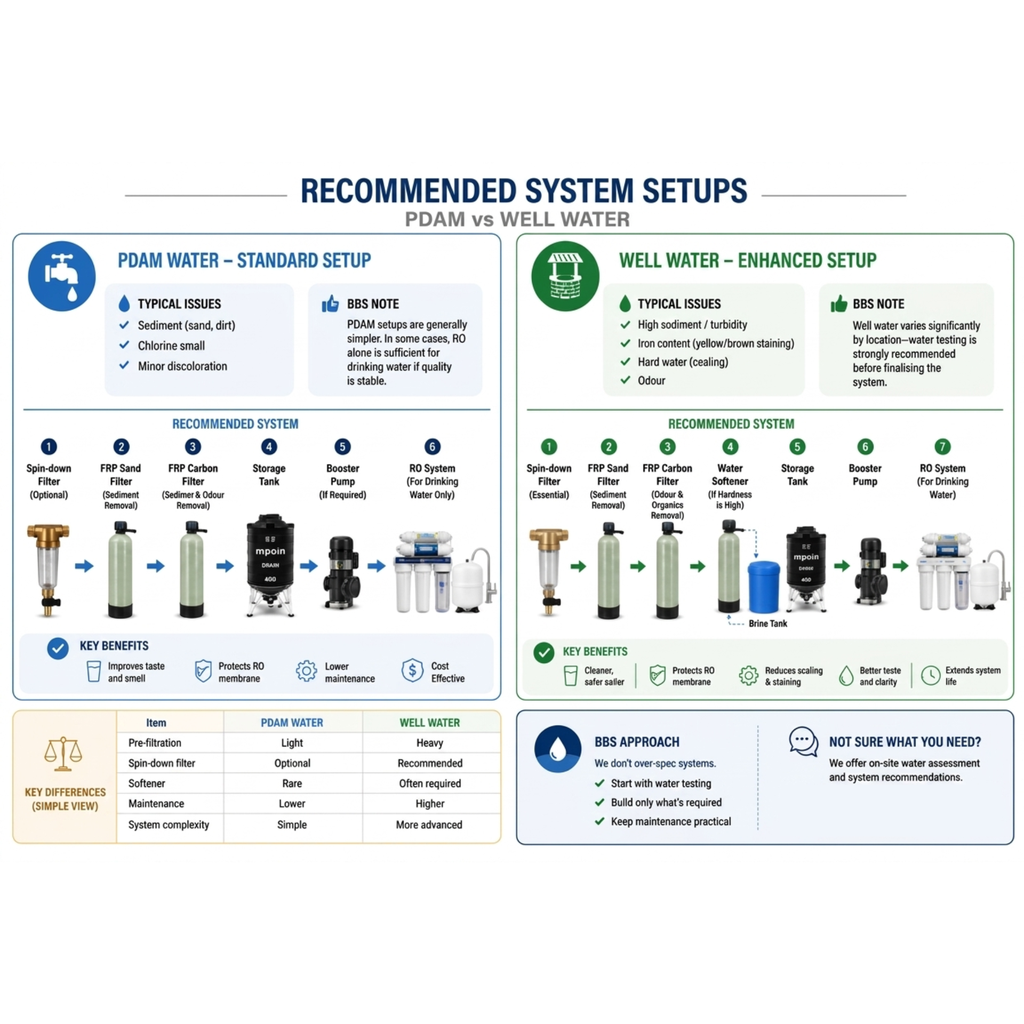
PDAM water typically requires lighter filtration, while well water often needs additional treatment such as sand filtration, iron removal, or softening. The correct setup depends on water testing.
Installation & Setup
Where should the system be installed?
- FRP systems: typically at ground level near the water source or before the storage tank
- RO systems: at point-of-use (kitchen or bar area)
Proper placement ensures performance and easy maintenance.
Will this improve water pressure?
No. Filtration systems do not increase pressure. If pressure is low, a booster pump may be required.
Maintenance & Performance
How often does the system need maintenance?
- RO filters: every 6–12 months
- RO membrane: every 1–2 years
- FRP media: typically 1–3 years
Maintenance depends on water quality and usage.
What happens if I install the wrong system?
Incorrect filtration can lead to poor water quality, frequent maintenance, and reduced equipment lifespan.
Do I need a water test first?
Recommended. Water testing ensures the correct system is selected and avoids unnecessary costs.
BBS Approach
We focus on practical, site-based solutions:
- Test the water first
- Recommend only what’s required
- Design systems based on real usage and conditions
- Keep maintenance simple and manageable